Ancestral Eating on a Budget Part 4
Let's talk about fats and oils and saturated fats They are essential to our existance, from the outside of every cell membrane in our bodies to hormones (more than just sex ones), cholesterol, and a substance dear to my heart, the myelin sheath (which is the fatty outside or white matter of nerve cells that is affacted when someone has multiple sclerosis).
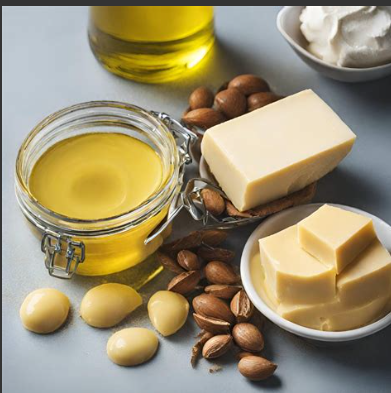
Why do I advocate eating fats and oils from wholefoods rather than seed oils? For 1000s of years humans evolved eating easily extracted and processed fats and oils, like ones from animals (tallow, lard, butter, ghee, cream and blubber) and from coconut and olives as well as palm oil (still used in many traditional Afrrican cultures). They generally have a high smoke point than seed oils and are stable for a longer time. They are usually solid at room temperature with the exception of the monosaturated olive oil.
Seed oils are relatively new on the scene and due to their high Omega 6:3 ratios they have been shown to be inflammatory. They are often used in processed foods as they are cheap for manufacturers. They have a low smoke point and go rancid quickly. They are usually liquid at room temperature (except for hydrogenated oils like margarine). One of few seed oils I do eat is organic Canterbury produced cold pressed flaxseed oil and this has been a seed oil that has been available for centuries.
Where can I find more budget friendly versions of fats and oils?
🧈For animal fats - your local butcher for dripping or fat to render.
🥥For non animal sourced oils - the most cost effective is coconut oil from Blue Coconut (clay filtered from the Pacific Islands) and is even sold in supermarkets.
Sadly so much good food is now so costly, including traditionally eaten fats/oils like butter and olive oil. We are fortunate to have real butter from pastured cows in NZ. Be aware a lot of imported olive oil is adultered by adding other oils to it.